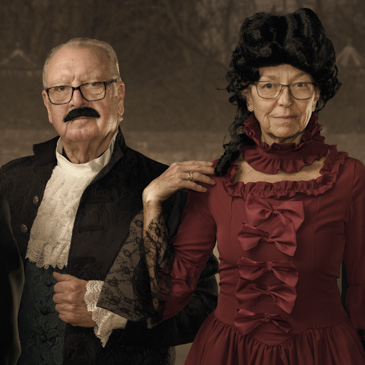
Steampunk portrait photography: Why one photo is never enough
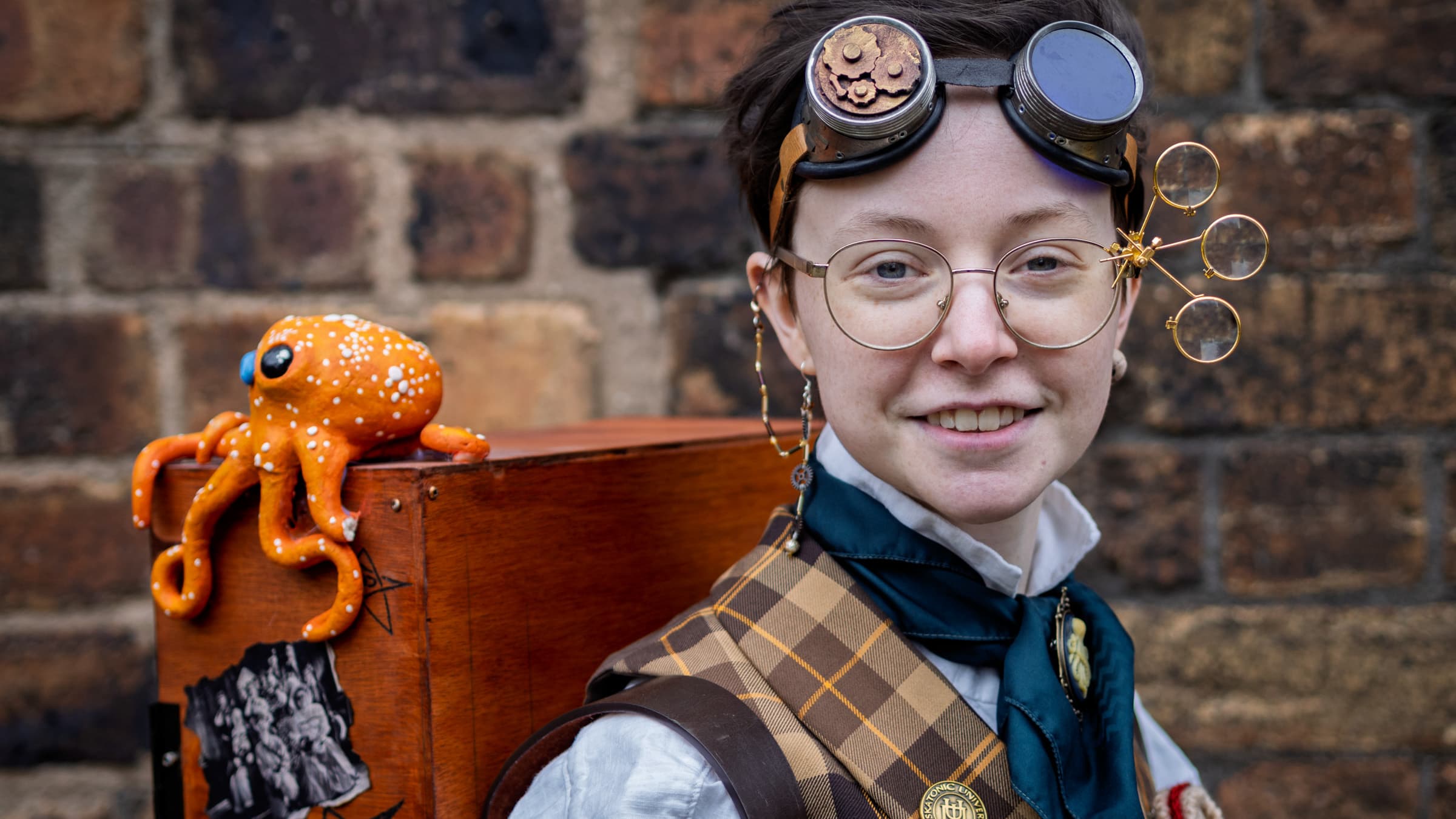
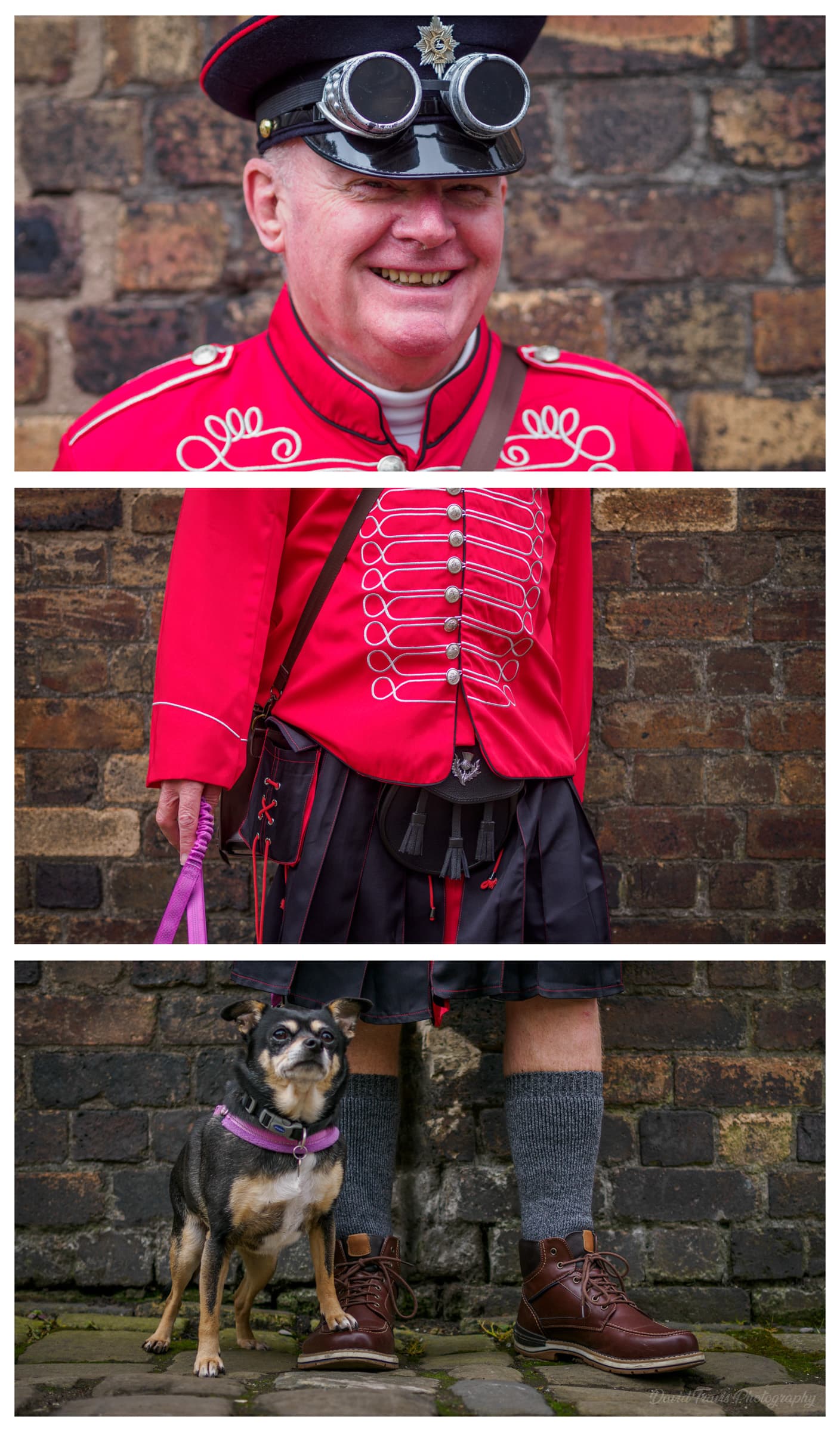
A local pottery museum put on a steampunk event earlier this month. I went along to take some portraits of people in their costumes.
I often find it useful to think in terms of a project or series when I’m taking photographs. What can I do to turn this into a collection of images that work as a set?
For this event — people in steampunk-themed outfits — I thought about using the conceit of a field study, like an excursion to a foreign land. That way I could imagine that I wasn’t photographing people but documenting types: “The Engineer”, “The Aviator”, “The Aristocrat”, “The Collector” and so on.
Steampunk Portrait
Top image: OM System OM-5. 1/640s, f/1.8, ISO 80. Olympus 45mm lens (90mm equivalent). Middle and bottom images: OM System OM-1 Mark 2. 1/1250s, f/1.8, ISO 200. Olympus 25mm lens (50mm equivalent).
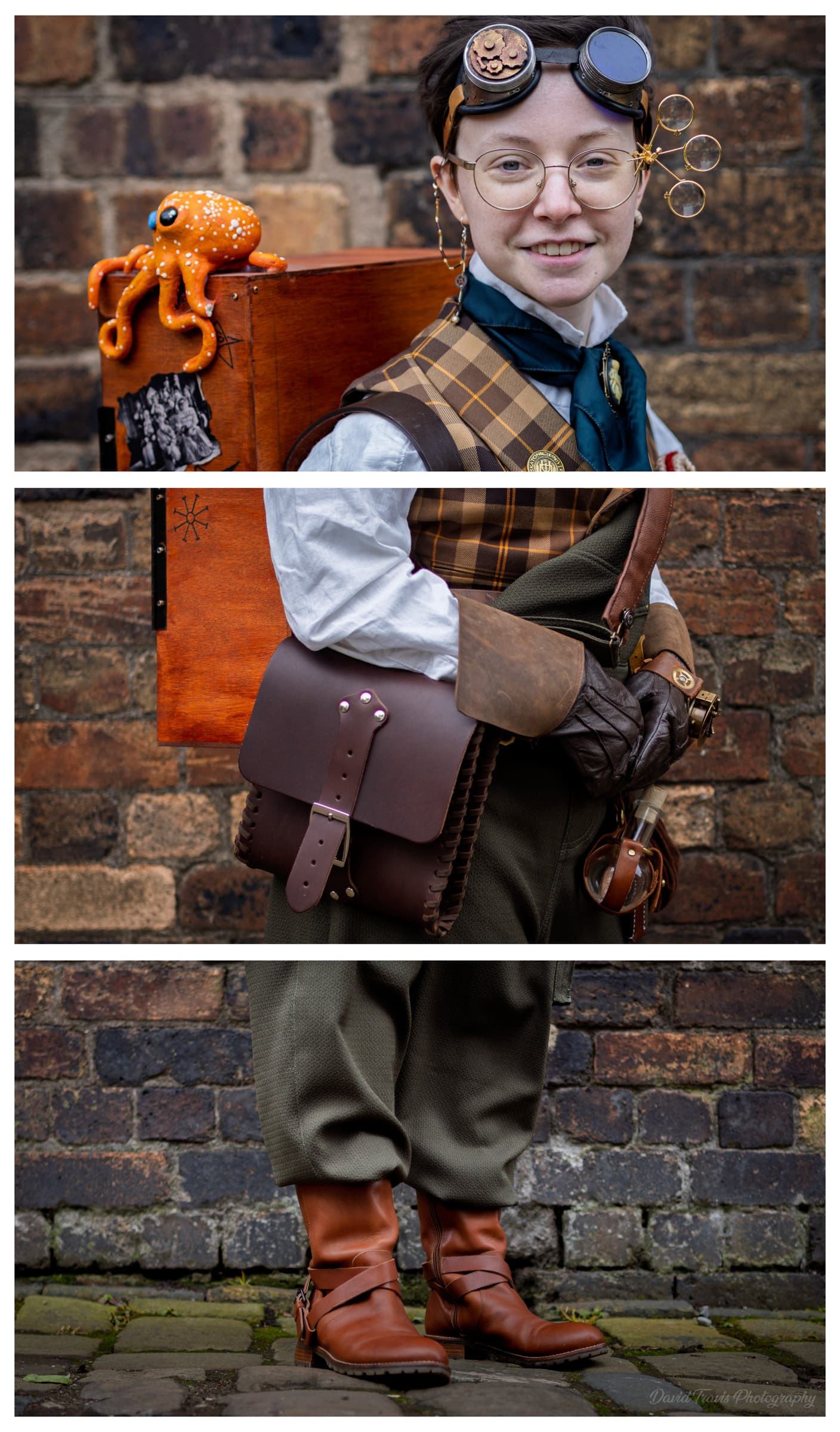
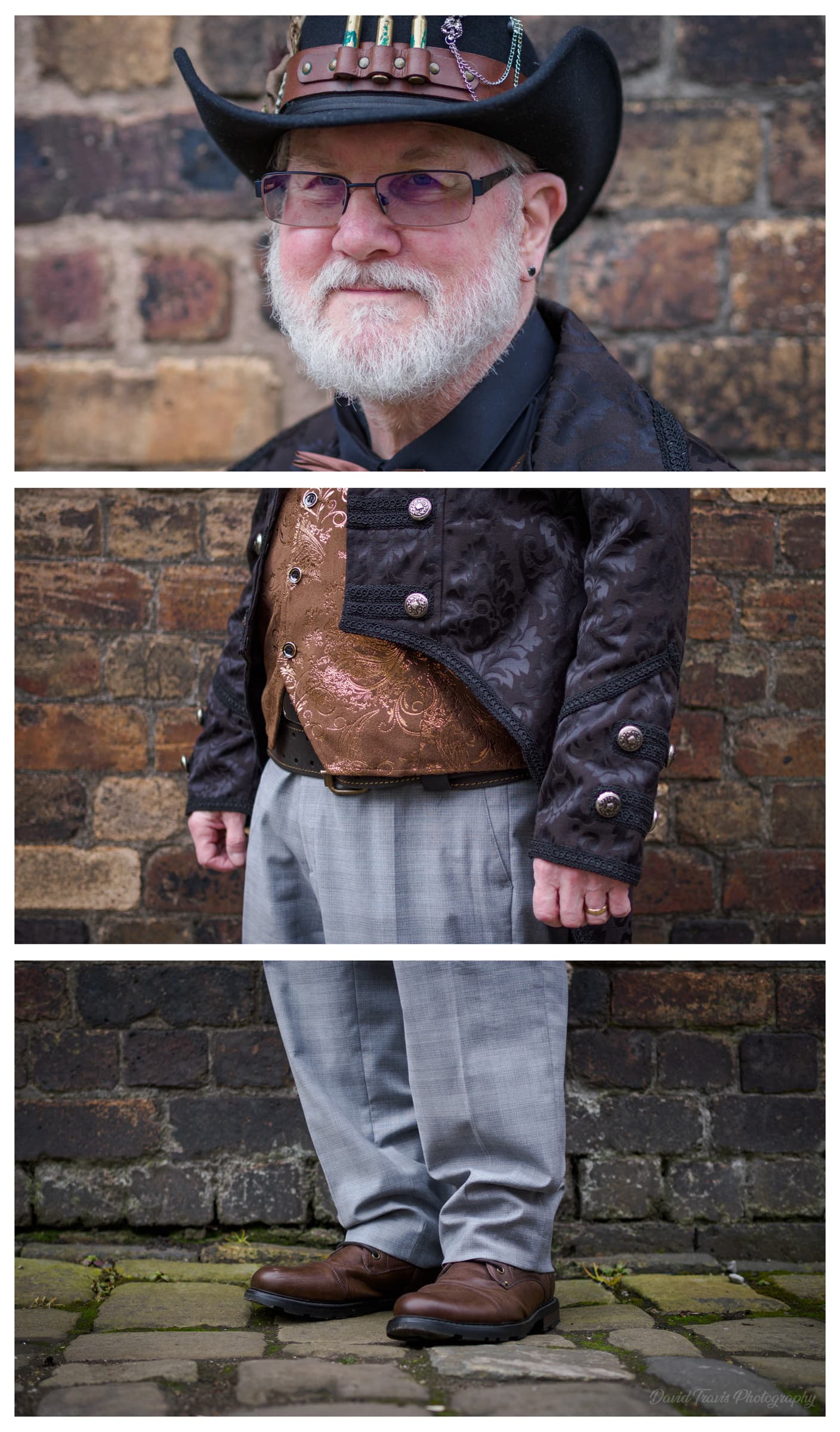
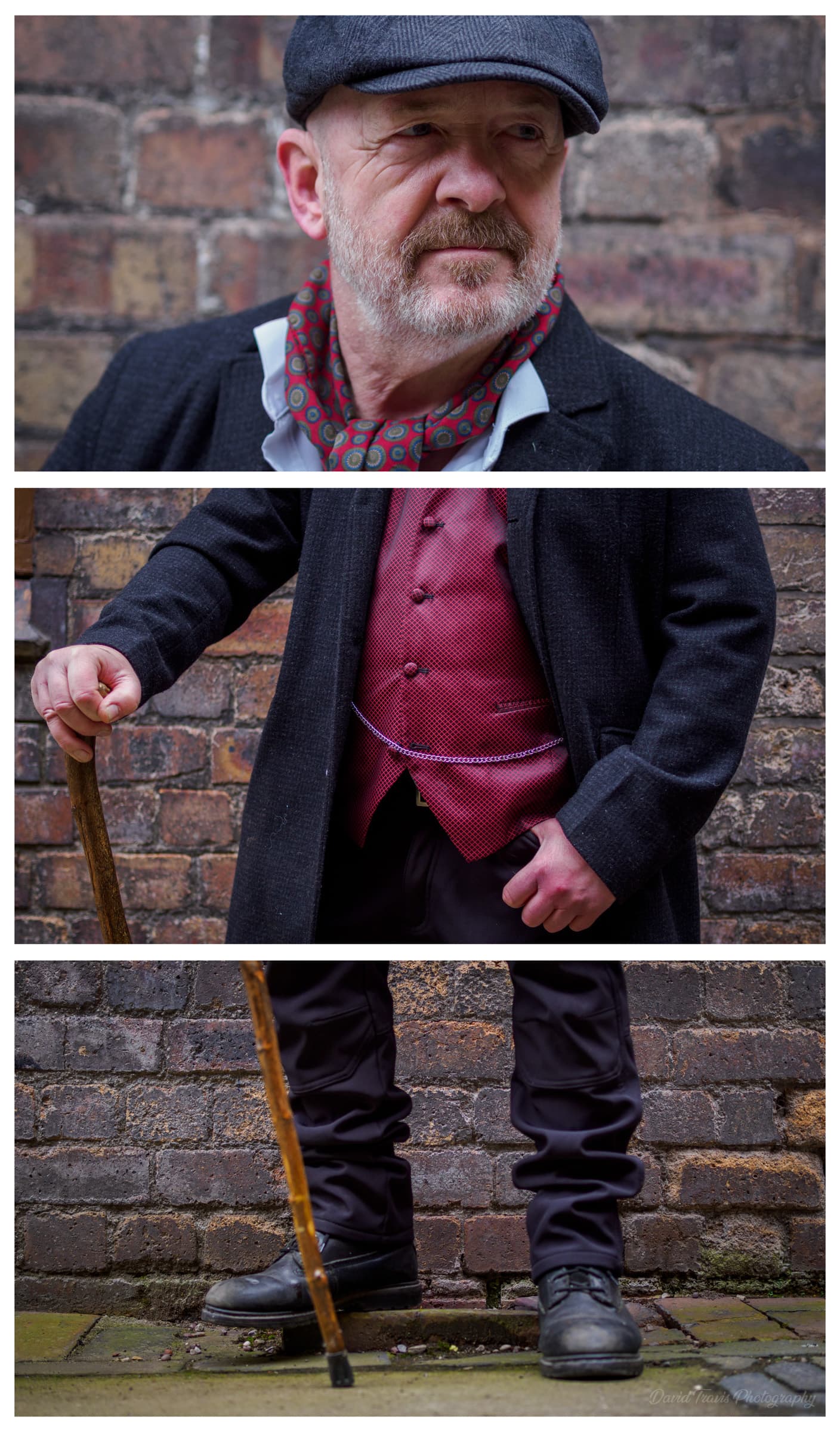
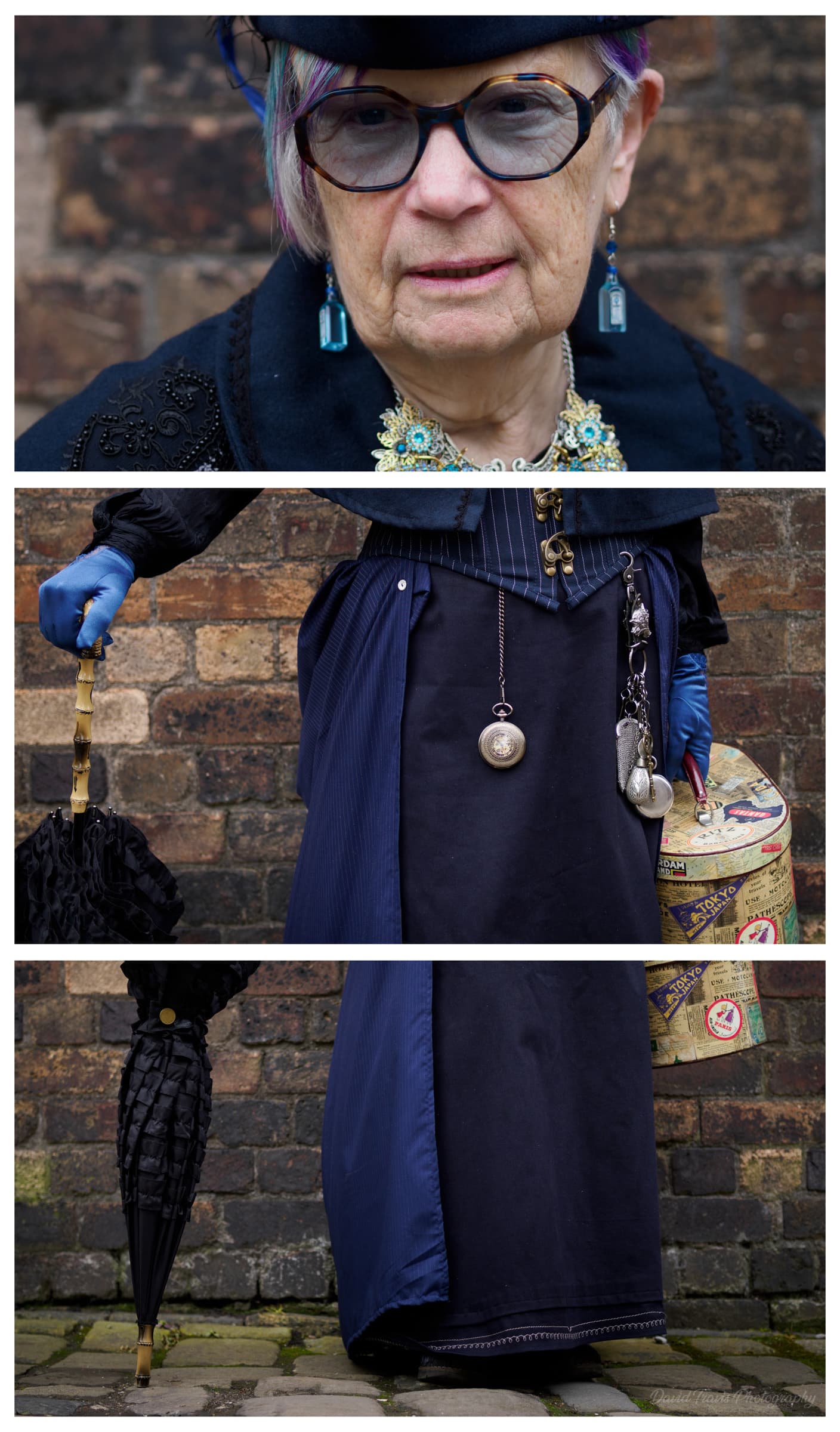
I remembered a treatment I’d used many years ago where I took three panoramic images of a person — head, torso and feet — and then combined them into a kind of collage. In a single image, your eye goes straight to the face. By showing three separate images, the viewer has to look three times. The breaks between the panels interrupt that automatic scan and slow things down, so you spend longer looking at other parts of the body. I thought that would work well here because I wanted to draw attention to the time and effort people put into creating their outfits and not just look at the person's face.
Steampunk Portrait
For technical data, see the first image.
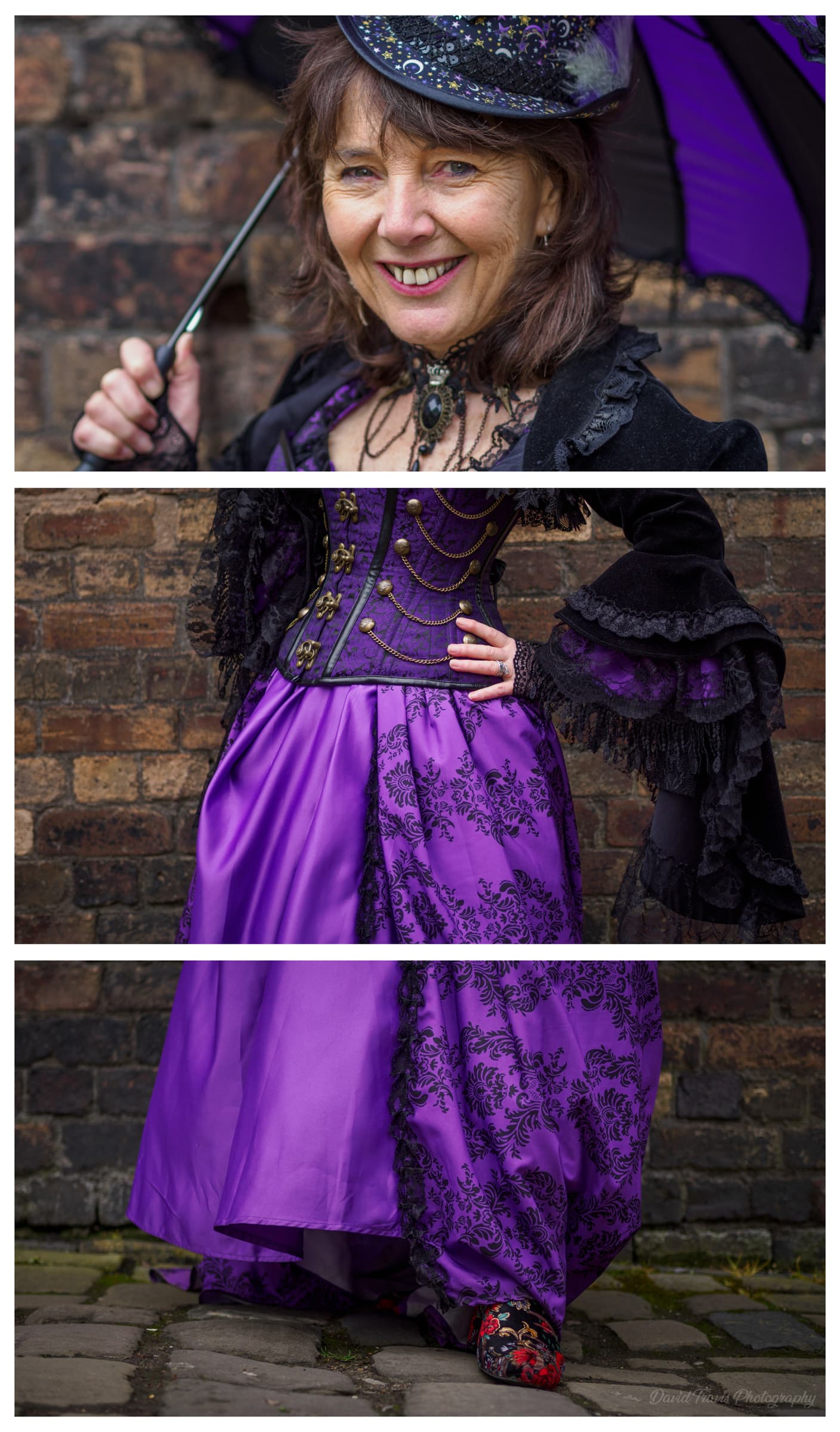
It also mirrors how these outfits are actually made. No one designs them from head to toe in one pass. They assemble components like goggles, fabrics, props and boots. The triptych echoes that process. It feels closer to an inventory than a portrait, which fits the maker culture behind steampunk.
Steampunk Portrait
For technical data, see the first image.
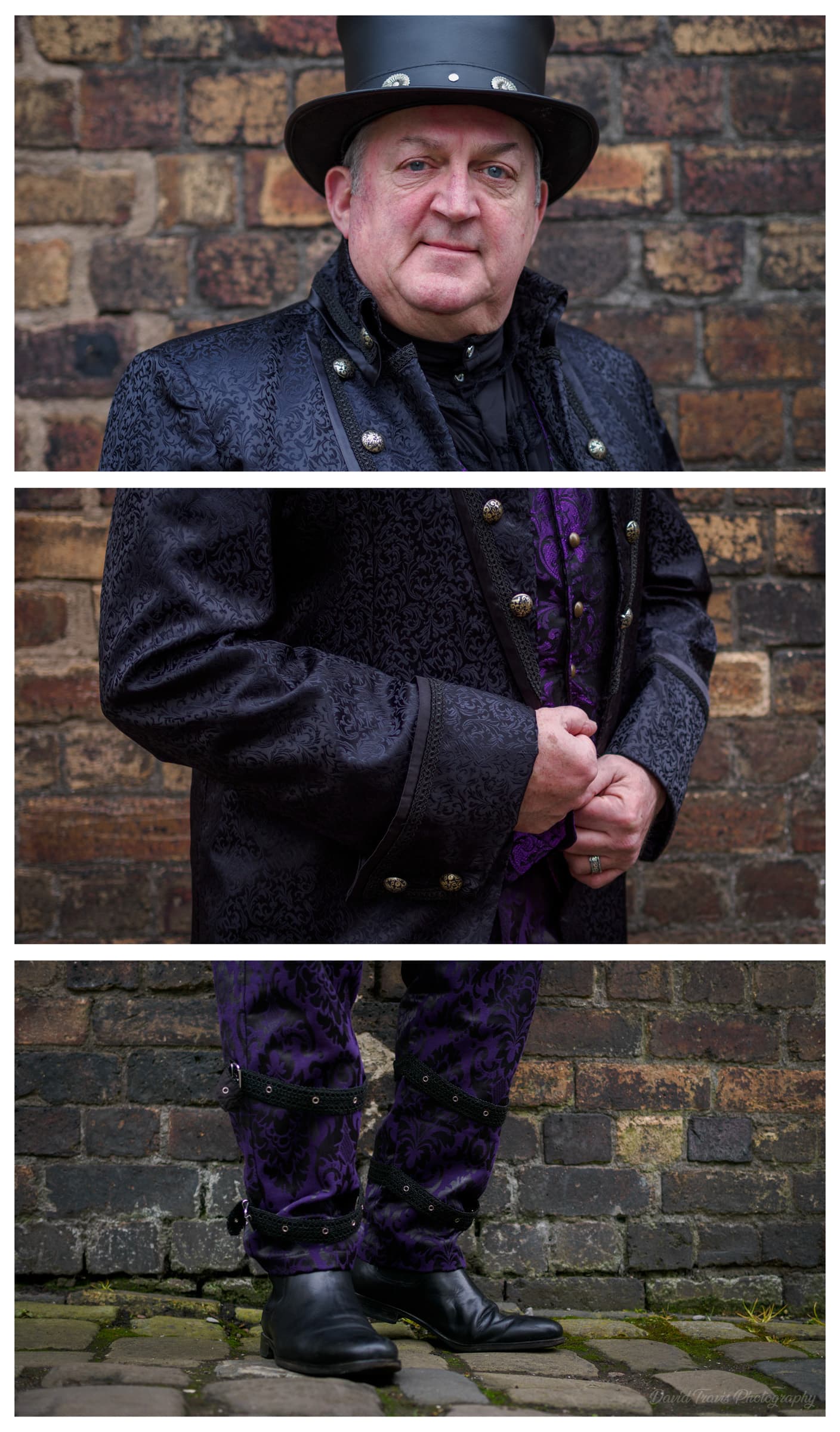
There’s also a perceptual effect going on. At first, you read it as a full person. But the gaps between the images stop that from working, so you start looking at the parts. Then you go back to the whole again. You end up bouncing between the two. The viewer has to do a bit of work to mentally stitch the person together, and that keeps them engaged for longer.
Steampunk Portrait
For technical data, see the first image.
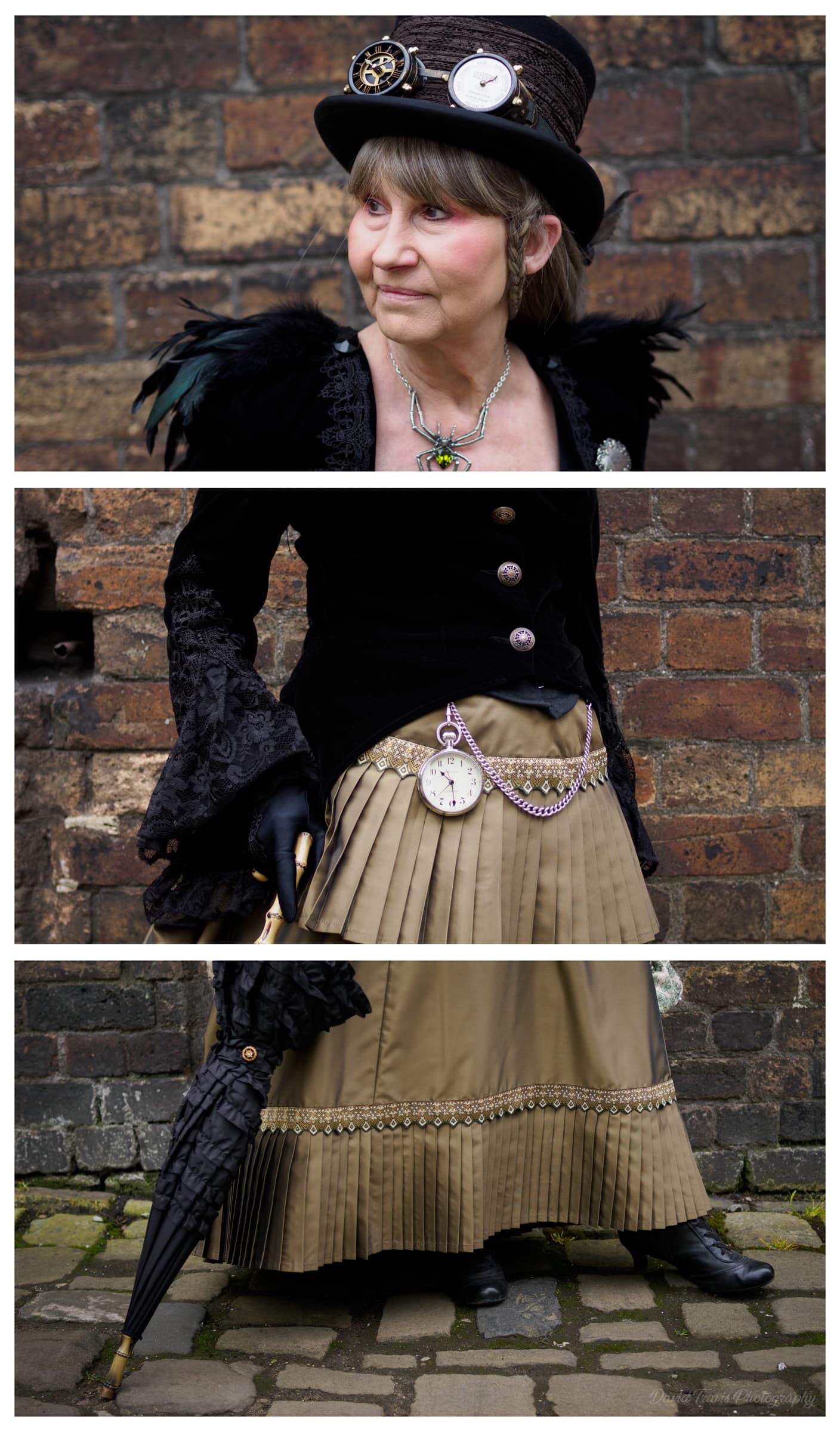
There’s a practical side to this as well. A full body shot would require a wider lens, which brings its own problems with distortion and perspective. By shooting each section at portrait focal lengths, I can keep a more natural rendering and then assemble the figure afterwards. It looks more like how you’d see the person if you were standing in front of them, looking up and down.
Steampunk Portrait
For technical data, see the first image.
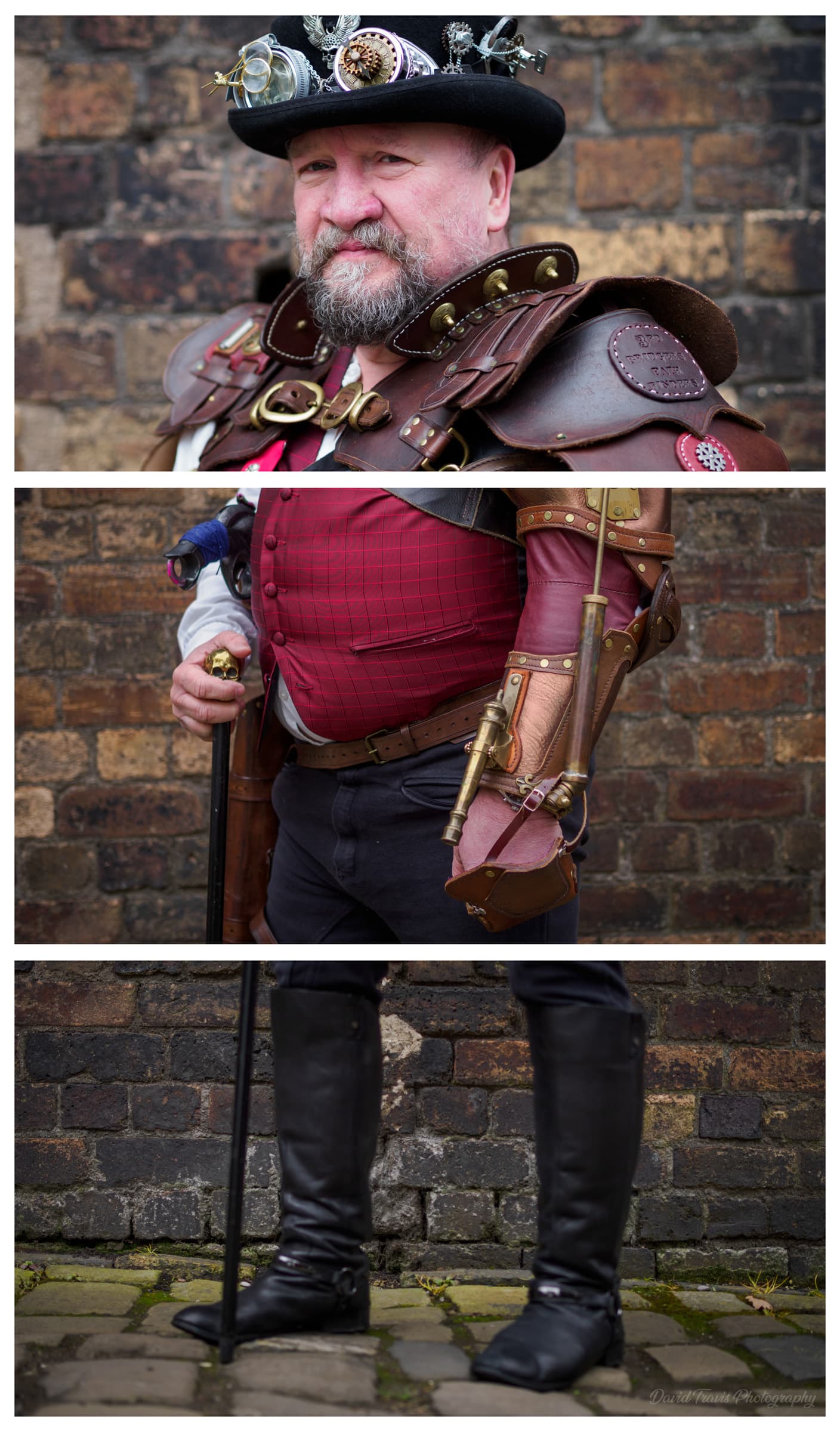
I experimented with different sized ‘slices’ but I found a 16:9 ratio worked best. When the slices are too narrow, you get a funfair, hall of mirrors effect that detracts from the outfit.
Steampunk Portrait
For technical data, see the first image.
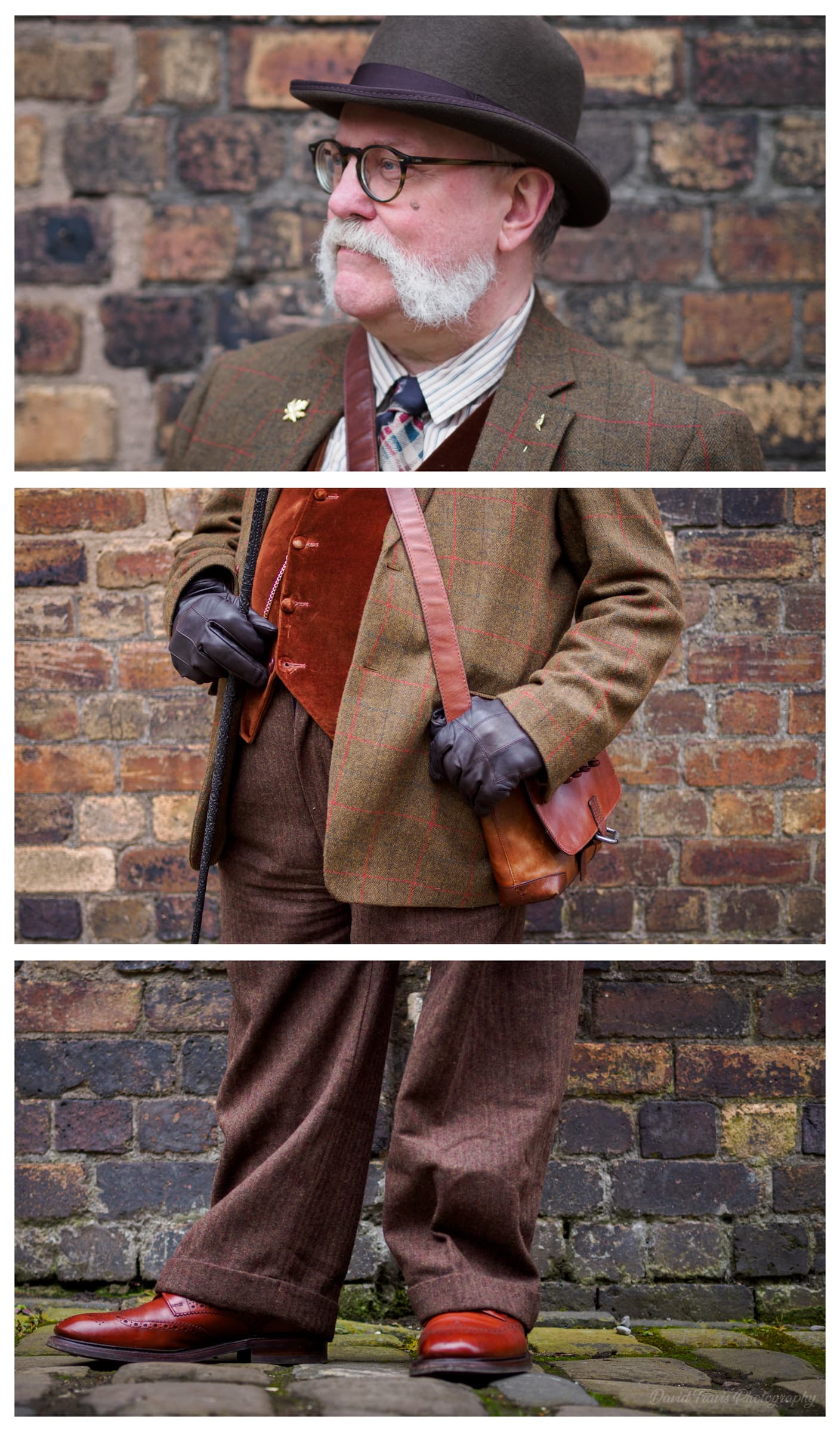
I also like how this treatment sidesteps a cliché problem. The obvious way to render steampunk portraits is to go all-in on faux-Victorian processes, like wet plate, sepia, that sort of thing. I wanted something that felt more contemporary.
What I would do differently next time
I spent less than 30 seconds photographing each person. I did have short conversations with them before and after, but this was mainly about building rapport and explaining what I was doing, or how they could contact me to get a copy of the photograph.
Steampunk Portrait
For technical data, see the first image.
That meant I didn’t always look closely enough at the outfits. For example, check out the very first portrait in this post. Notice the backpack? I just thought it was a boxy backpack but when I saw them later I noticed that the backpack had a glass back: it was actually a cabinet of curiosities! It would have made a great still life. But I'd missed my chance to photograph it as it was now too busy and the light wasn’t right.
Steampunk Portrait
For technical data, see the first image.
Next time, I will ask a question before I take a portrait like this: “If you were photographing your outfit, what would you focus on?” (or simply “Point to the thing I should photograph.”)
Steampunk Portrait
For technical data, see the first image..
That gives me a steer straight away. It also gives some control of the portrait to the subject. Up to now, my justification for the triptych has been about how viewers look at the image. This would add another layer: how the maker wants to be seen.
Steampunk Portrait
For technical data, see the first image.
I’d still make the three images, but I’d bias one of them towards whatever they point to, or take an extra frame just for that detail. Over time, that could become a second set of images alongside the portraits: the objects that matter to the people who made the outfits.